
Self-Hosting
A dive into my EU-based self hosting setup for video, music, blogs and other apps. How I manage security, backups, and costs
Background
In the wake of AI mass-scraping, ubiquitous tracking and privacy concerns, I started migrating to more privacy-focused, ideally EU-based solutions for my personal data. I settled on self-hosting and migrating my data over to alternatives to Instagram, Youtube, Netflix or Spotify. I previously ran a few private services on an Intel NUC hosted in my own flat and served over a Wireguard tunnel. Expanding that setup was not viable as it would not scale well for hosting some of the services I had in mind (Peertube being one), and I did not want to provide an ingress into my private network.
Cloud
I chose OVHCloud for my setup to keep my data within the EU, and because their VPS pricing is extremely good for my purpose. I set up two VPSes:
- 12 vCores, 48 GB RAM VPS where all services are hosted
- 4 vCores, 8 GB RAM VPS to run an Uptime Kuma , some backup services, and a Forgejo Runner
Both VPSes use Yunohost to manage deployment of applications. The main VPS’s applications include:
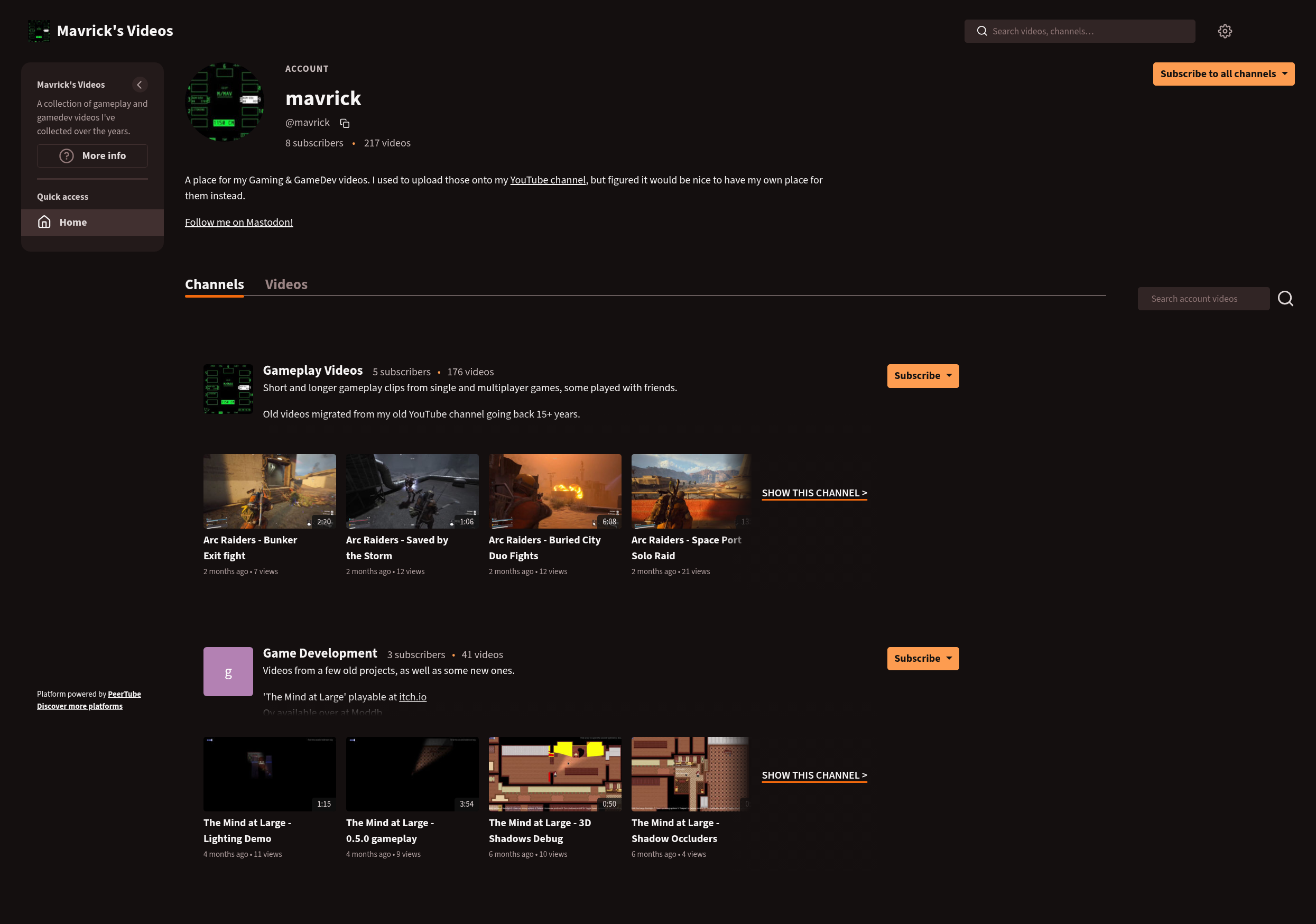
- Peertube for serving gamedev/gaming videos, as well as for uploading longer, private gameplay videos to share with friends.
- Funkwhale for streaming my own music
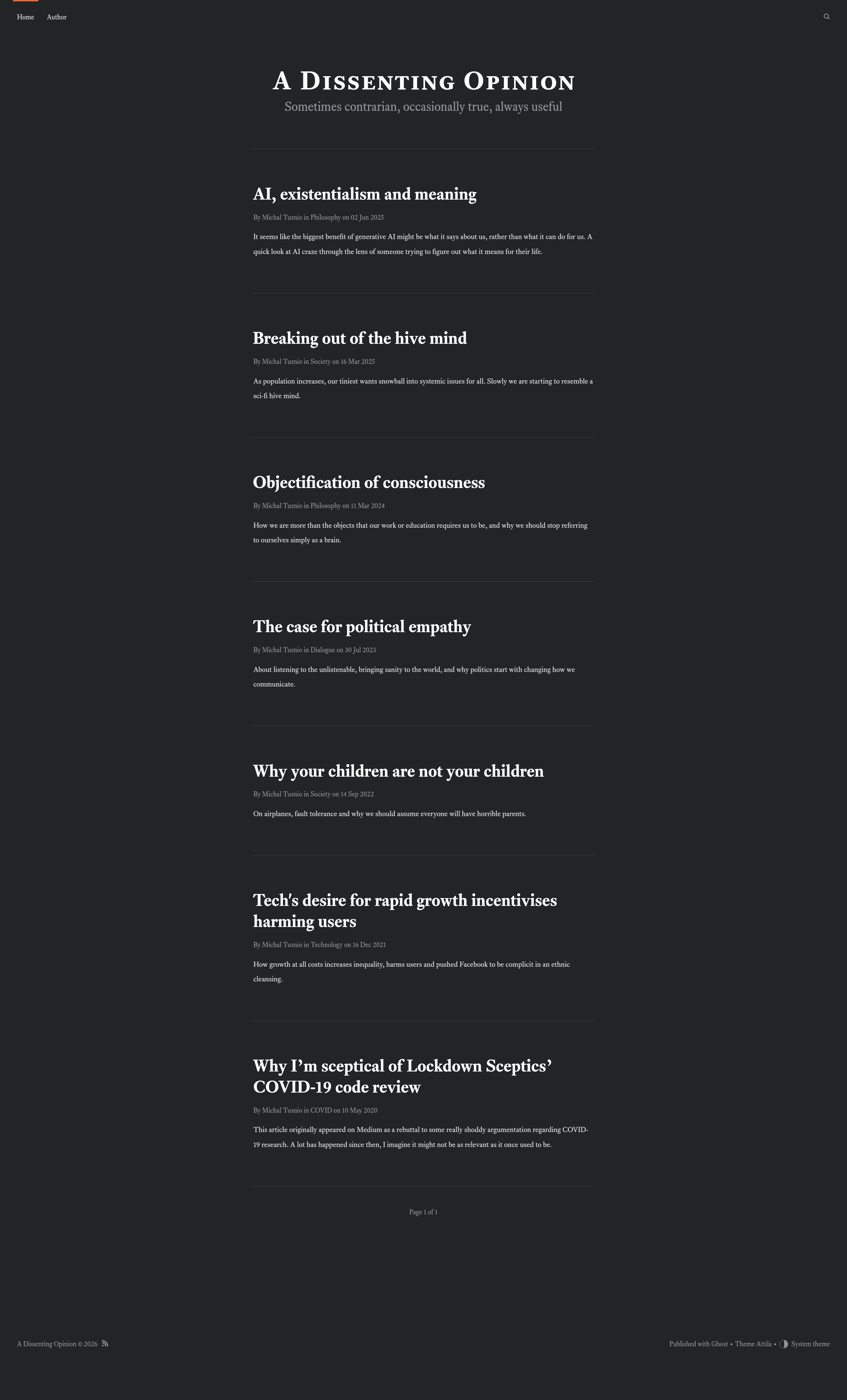
- A Dissenting Opinion where I occasionally write
- A private, unfederated Matrix server
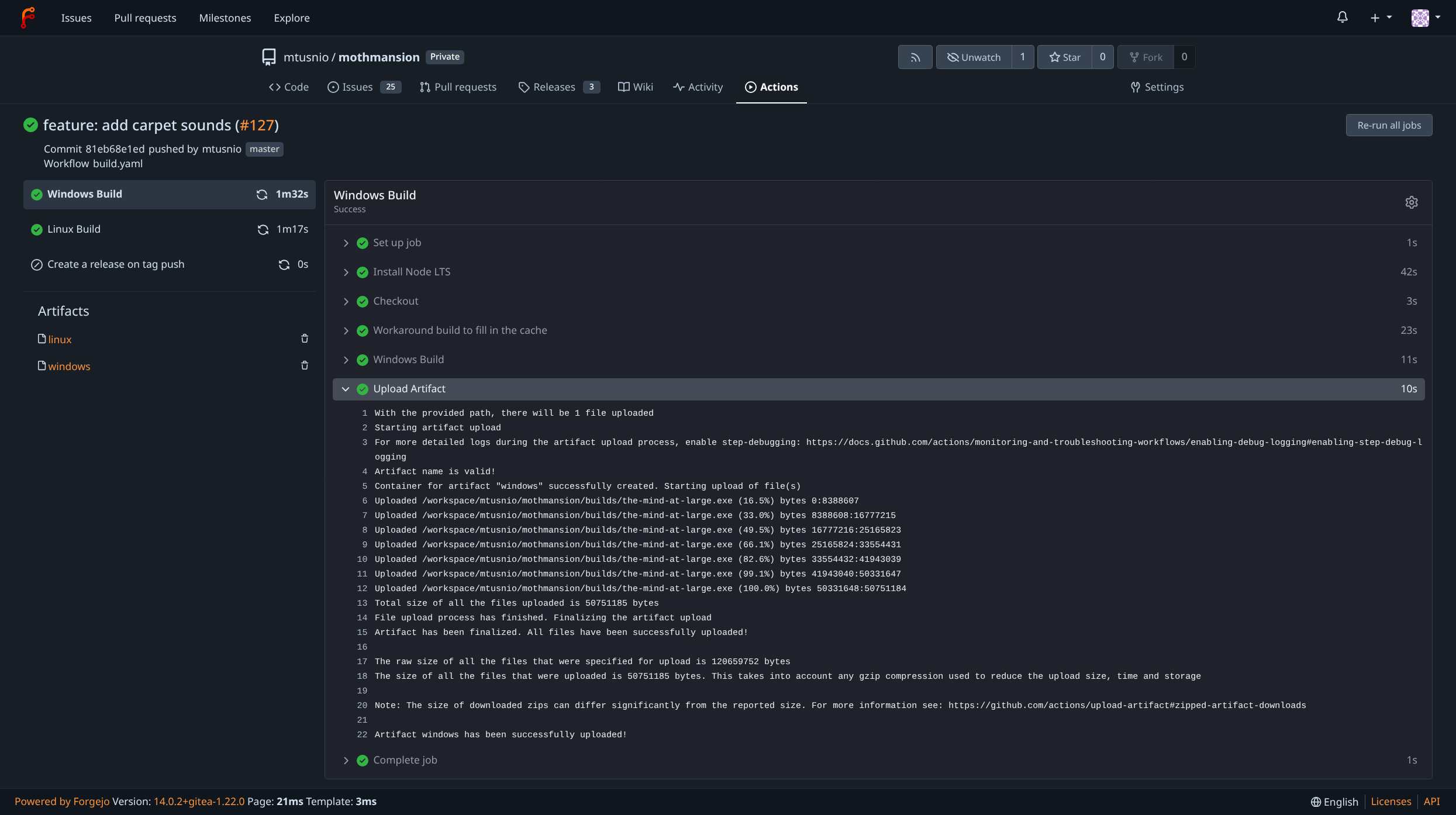
- A Git Forge
- A private Archive Box
- A Jellyfin instance
- A WebDAV backup server for phone backups
- La Suite Meet
The CPU/RAM is more than enough to handle all of the traffic + video encoding, the main issue being storage costs. Whenever possible, applications are set up to use OVHCloud’s S3 backend to store data. If it is not supported directly, I mount applications’ local filesystems on S3 via rclone.
The only non-EU element is CloudFlare as they are my domain registrar and DNS provider.
Security
The main threat to the VPSes is SSH access, since it is exposed on the default 22 port number and open to any IP. Although SSH keys are enforced and only one user is allowed to log in via SSH, this could be further hardened by forcing SSH to only be done via a Wireguard tunnel. This would take the SSH port off of the public Internet, but it risks issues if the tunnel is misconfigured or fails.
There is also the concern of access to data by the cloud provider. Any sensitive data (Matrix communication, phone backups via WebDAV) is only uploaded in encrypted format. Unencrypted data consists of Funkwhale music, Peertube videos, Jellyfin movies/series, Git Forge source code, and while it should be kept private it is not of any risk if exposed to the cloud provider.
Any Rclone mounts (eg. Jellyfin) are automatically set up with an encryption later. This will not prevent someone with access to the VPS from recovering the encryption key, but seems like a good practice as it costs little to add in an extra encryption layer.
Yunohost handles all Let’s Encrypt certificate provisioning for custom domains.
Backups
Backups are done both on the cloud level (a 24hr snapshot), and via Restic. The latter backups are done on an 8-hour schedule, are then encrypted and uploaded to S3..
Restic backups, Peertube, Funkwhale audio/video files are replicated to another bucket in a different region, meaning data is stored in at least two distant location. I am planning to set up a local RPI with an external HDD to perform a weekly backup sync for an off-site backup. This would mostly protect against losing access to my OVHCloud account, as even though replication avoids a single point of failure, there is the unlikely case of OVHCloud denying me access to my data. Off-site replication de-risks that single point of failure.
Monitoring
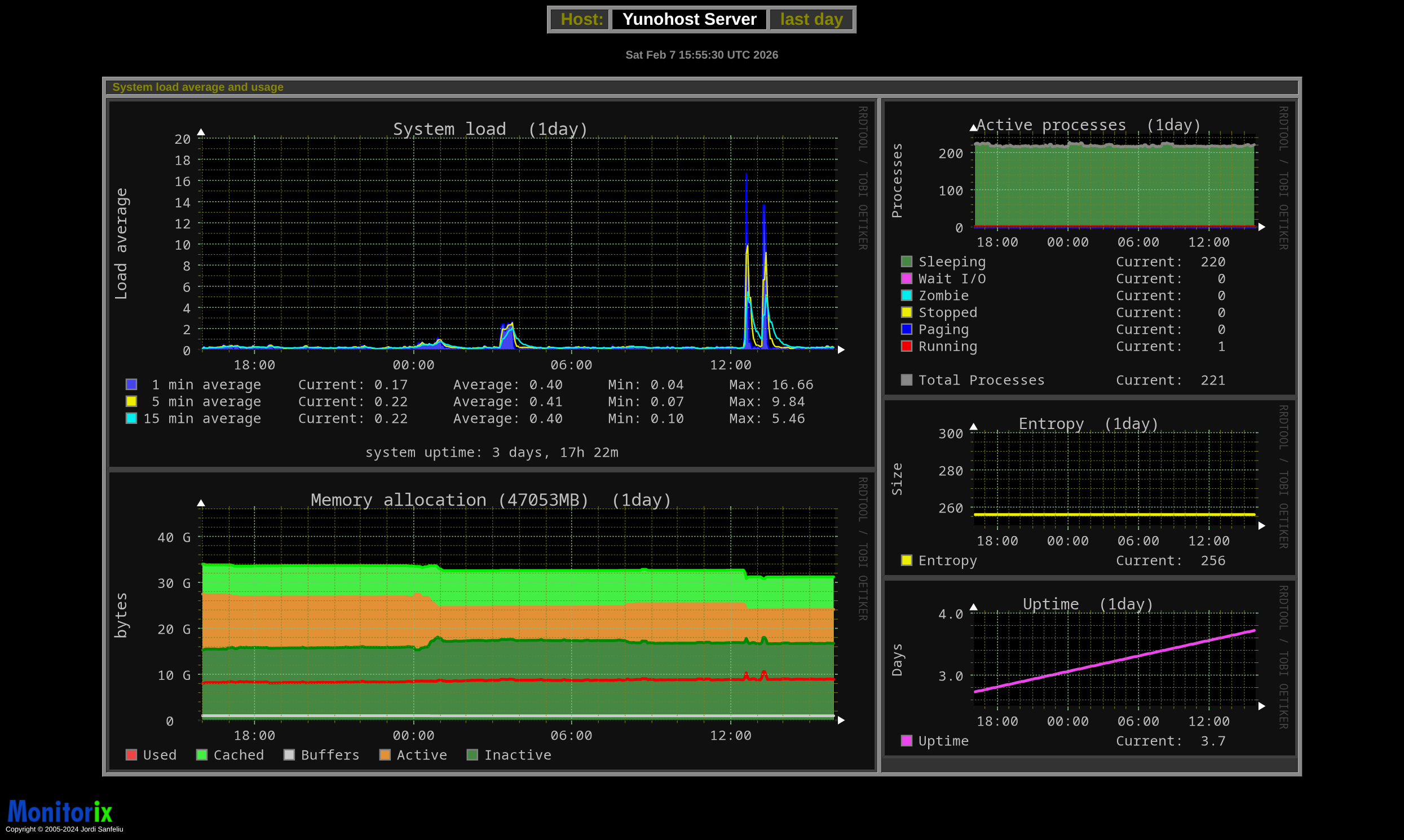
Glances and Monitorix are used to keep track of common metrics, since I am mostly dealing with a single VPS this is enough for visibility.
Uptime Kuma on the smaller VPS handles keeping track if all services are up. It is set up to send Matrix notifications via a bot, and, if the Matrix server itself is down, to my email.
Cost Control
The VPSes are the bulk of the cost, coming up to 300 USD a year. I might have overprovisioned a little bit and could have easily gone with a smaller instance, so that is something to explore next year.
Thanks to using S3 the > 1TB of data (including backups and replications) costs me about 120 USD a year to handle. As of recently all S3 public egress on OVHCloud is free of charge, I can serve any video/music/static content directly from S3 without worrying about denial-of-wallet attacks, while avoiding having to burden the VPS.